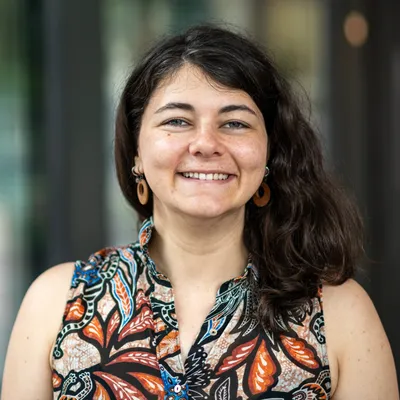
Stephanie Jurburg
Dr. Stephanie Jurburg is a microbial ecologist and data scientist at the Helmholtz Centre for Environmental Research (UFZ) and the German Centre for Integrative Biodiversity Research (iDiv). Her work addresses a critical challenge in modern biology: how to make sense of the massive, fragmented datasets generated by microbial sequencing. As the lead developer of MiCoDa (the Microbial Community Database), she has created the world’s largest human-curated repository of standardized microbiome data, enabling researchers to uncover global patterns in microbial life that single studies cannot reveal. Beyond technical infrastructure, Dr. Jurburg is a vocal advocate for „data equity“; she leads international „Datathons“ and the sIBTEDS project to train researchers in underrepresented regions, ensuring that our understanding of the global microbiome is truly global.
MiCoDa a second life for the invisible majority
Section titled “MiCoDa a second life for the invisible majority”The reuse of microbial metabarcoding data is limited by inconsistent metadata, fragmented archiving practices, and difficulties associated with sequence data processing. To address this, the Microbial Community Database (MiCoDa) and the Datathon project work in concert to foster a culture of open, harmonized, and community-driven data sharing in microbial ecology. MiCoDa currently houses 30,000 globally distributed, reprocessed 16S rRNA samples—standardized for comparability and linked to their source publications, and is the largest curated microbiome database in the world. Ongoing software development within MiCoDa focus on metadata extraction (HVRLocator) and bioinformatics for harmonization (MicroMacS). Datathons—launched in 2022—are regional, three-day events that train researchers in standardized metadata practices, support the archiving of amplicon sequencing data, and catalyze collaborative reuse. These events have engaged over 750 researchers across Latin America, China, and Africa, and upcoming editions are planned for the Polar regions (2027). Together, Datathons and MiCoDa form a pipeline from local data mobilization to global data integration that enhances the visibility, accessibility, and usability of microbial data, while promoting equitable participation in global microbiome research.
